


Program Highlights
- Individual attention and mentoring from faculty
- Students have a primary faculty advisor but are also supported to conduct research projects with other faculty if it fits with their goals
- Students typically receive 5 years of funding, including tuition remission
- We’re a highly collaborative group, who not only enjoy “talking science” with each other but who also frequently conduct research together across laboratories
- Methods training in experimental design, experience and thought sampling, protocol analysis, eye-tracking and pupillometry, psychometrics, electroencephalography (EEG), event-related potentials (ERP), and linguistic analysis
- Recent graduate seminars in Variation in Executive Control, Cognition in the Classroom, Event Cognition, Cognitive Aging, Metacognition, Working Memory, Memory and Belief, and What’s the big idea? Competing perspectives on human cognition
View Faculty Members in Cognitive Psychology
SELECTED PUBLICATIONS
BY CURRENT/RECENT STUDENTS
Cox. S. W., Kelley, C. M., Antony, J. W., & Wahlheim, C. N. (2026). Test delay and change awareness moderate retroactive and proactive memory effects. Memory & Cognition, forthcoming
Delaney, P. F., & Adams, L. R. (2025). Friedlander’s book is brilliant, but sometimes misunderstands Ericsson: Ericsson’s descendants consider aptitude and LT-WM. Journal of Expertise, 8(4), 254-257.
Gilbert, L. T., & Delaney, P. F. (2025). Intentions to forget and the importance of interference: Further tests of the strategic retrieval account of recent list-method directed forgetting. Memory, 33(6), 677-696.
McHale, M.H., & Kane, M.J. (2025). The effects of attention contagion on task-unrelated thought in a virtual lecture. Collabra: Psychology, 11(1): 140709.
Rodriguez-Boerwinkle, R.M., Welhaf, M.S., Smeekens, B.A., Booth, R.A., Kwapil, T.R., Silvia, P.J., & Kane, M.J. (2025). Variation in divergent thinking, executive-control abilities, and mind-wandering measured in and out of the laboratory. Creativity Research Journal, 37(4), 604-638.
Welhaf, M.S., Meier, M.E., & Kane, M.J. (2025). Building a construct valid battery of performance and self-report indicators of sustained attention consistency. Behavior Research Methods, 57, article 306.
Wellons, B. M. & Wahlheim, C. N. (2025). Misinformation reminders enhance belief updating and memory for corrections: the role of attention during encoding revealed by eye tracking. Cognitive Research: Principles and Implications, 10:39.
Kemp, P. L., Loaiza, V. M., Kelley, C. M., & Wahlheim, C. N. (2024). Correcting fake news headlines after repeated exposure: Memory and belief accuracy in younger and older adults. Cognitive Research: Principles and Implications, 9:55.
Wiley, R. W., Singh, S., Baig, Y., Key, K. M., & Purcell, J. J. (2024). The English Sublexical Toolkit: Methods for indexing sound–spelling consistency. Behavior Research Methods, 57(6), 6826–6861.
Wiley, R. W., Key, K. M., & Purcell, J. J. (2023). Pseudoword spelling: Insights into sublexical representations and lexical interactions. Cognitive Neuropsychology, 40(5-6), 215–242.
Request more information
Please address all graduate application questions to:
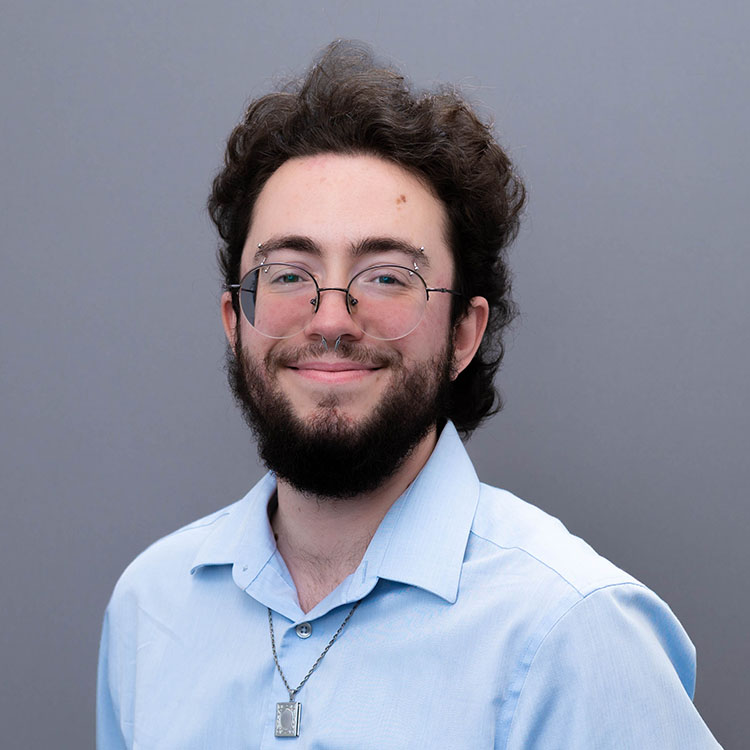
Malcolm Moon
Administrative Assistant
a_mohan@uncg.edu | 336.256.8538
Please address all additional graduate questions to:

Paul Silvia
Professor & Graduate Program Director
p_silvia@uncg.edu | Eberhart 281