
Phd In Social Psychology

Mission & Aims

Graduate students trained in Cognitive, Developmental, Social, or Quantitative Psychology follow a single curriculum with a uniform set of requirements, but their research programs and seminar courses focus on their unique areas of interest.

Our philosophy can be summed up as cooperative, and the small size of our program ensures individualized attention for all students. Although students work directly with a faculty advisor, following a mentor-apprentice model, they also have considerable freedom to collaborate with other faculty and students within and beyond the Department. Indeed, we encourage students to publish with several faculty members before they graduate. Greensboro’s central location in NC has resulted in close ties to other top departments, creating opportunities for our students to take courses, collaborate, and network.

Application Deadline:

  • December 1
  • A note on the GRE: This program does not require GRE scores as part of the admissions process. GRE scores will not be considered as part of our admissions decisions rubric.

Recent graduates have secured postdoctoral and tenure-track positions:

  • Alexander Christensen, Vanderbilt University
  • Emily Nusbaum, Amazon.com
  • Roger Beaty, Penn State University
  • Katherine Cotter, Positive Psychology Center, UPenn
  • Jason Strickhouser, California Dept of Health Care Services
  • Ashlyn Brady, Sweet Briar College

Program Highlights

  • Individual attention and mentoring from faculty
  • Students have a primary faculty advisor but are also supported to conduct research projects with other faculty if it fits with their goals
  • Students typically receive 5 years of funding, including tuition remission
  • We’re a collegial and collaborative group
  • Methods training in experimental design, experience sampling, eye-tracking and pupillometry, psychometrics, meta-analysis, fMRI, mouse-tracking, longitudinal designs, behavioral observation, and advanced statistical methods
  • Recent graduate seminars in Self and Identity, Social Comparison, Social Neuroscience, Creative Thought

SELECTED PUBLICATIONS
BY CURRENT/RECENT STUDENTS

Brady, A., Baker, L. R., Agnew, C. R., & Hadden, B. W. (2022). Playing the field or locking down a partner?: Perceptions of available romantic partners and commitment readiness. Journal of Experimental Social Psychology, 101, 104334.

Brady, A., Baker, L. R., Muise, A., & Impett, E. A. (2021). Gratitude increases the motivation to fulfill a partner’s sexual needs. Social Psychology and Personality Science, 12, 273-281.

Lesick, T. L., & Zell, E. (2021). Is affirmation the cure? Self-affirmation and European Americans’ perception of systemic racism. Basic and Applied Social Psychology43, 1–13.

Liebenow, H. A., Boucher, K. L., Cassidy, B. S. (in press). Understanding evaluations of Kamala Harris in 2020: Political ideology qualifies perceived communality effects when communal cues are present. Psychology of Women Quarterly.

Ojeda, J. T., Silvia, P. J., Cassidy, B. S. (2022). Mental representations of sickness positively relate to adaptive health behaviors. Evolutionary Psychology, 20(3), 1-12.

Rodriguez, R. M., Fekete, A., Silvia, P. J., & Cotter, K. N. (2021). The art of feeling different: Exploring the diversity of emotions experienced during an art museum visit. Psychology of Aesthetics, Creativity, and the Arts. Advance online publication. https://doi.org/10.1037/aca0000443

Rodriguez-Boerwinkle, R. M., Boerwinkle, M. J. & Silvia, P. J. (2022). The Open Gallery for Arts Research (OGAR): An open-source tool for studying the psychology of virtual art museum visits. Behavior Research Methods. https://doi.org/10.3758/s13428-022-01857-w

Stockus, C. A., & Zell, E. (2023). The regional big-fish-little-pond effect: Evidence from national and subnational comparisons. British Journal of Social Psychology62, 1158–1176.

Request more information

Please address all graduate application questions to:
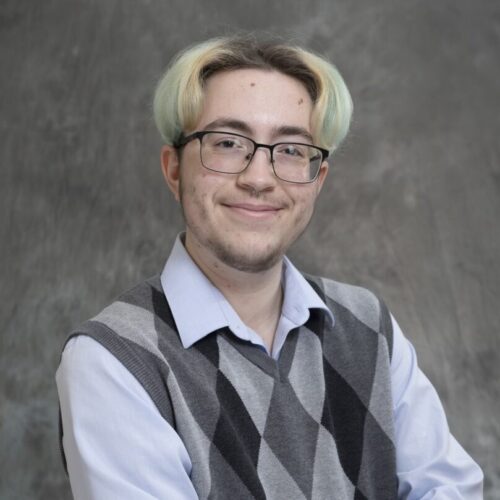
Malcolm Moon

Malcolm Moon

Administrative Assistant
a_mohan@uncg.edu | 336.256.8538

Please address all additional graduate questions to:
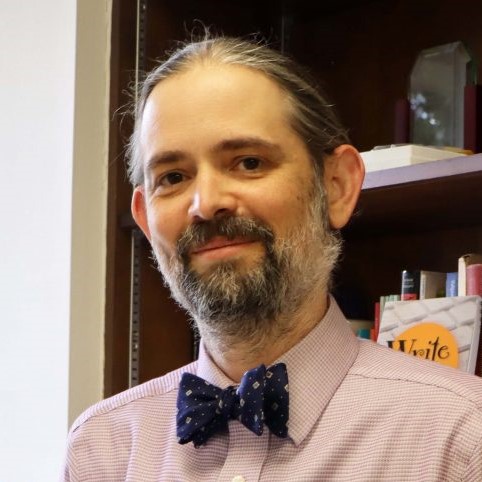
Paul Silvia headshot with bowtie

Paul Silvia

Professor & Graduate Program Director
p_silvia@uncg.edu | Eberhart 281

Share This